
If you’re an international person thinking about relocating to Indonesia, the quality of the educational system can play a major role in your choice. It’s crucial to know your alternatives if you want to make sure your kids obtain a top-notch education because Indonesia’s educational system may differ greatly from your own. All significant expectations regarding the nation’s educational system are covered in this article.
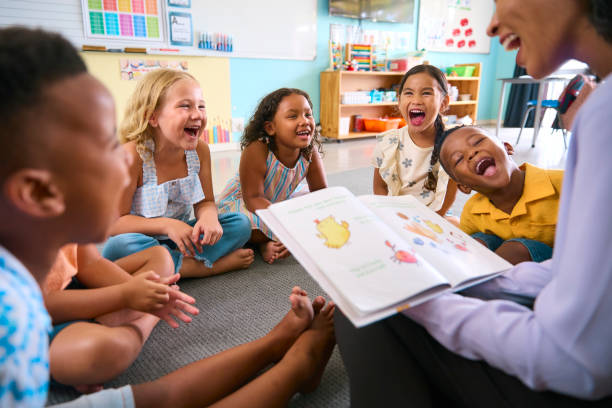
The Indonesian education system
The Ministry of Education and Culture oversees and centralizes the Indonesian educational system. From the age of 7 to 18, 12 years of obligatory education are needed. This consists of three years of junior high school (sekolah menengah pertama), three years of senior high school (sekolah menengah atas), and six years of elementary school (sekolah dasar).
In Indonesia, there are two types of schools private (swasta) and public (negeri). While private schools charge lesser tuition but frequently have superior resources and facilities, public academies are supported by the government and generally have lower education costs.
Private schools may deliver multinational courses, similar to the International Baccalaureate (IB) or Cambridge International Examinations (CIE), in addition to the public curriculum. These courses aim to give scholars an internationally honored education and get them ready for entrance to universities throughout the globe.
Expat education options in Indonesia
You will have a few possibilities for your kids’ education in Indonesia if you are an expat:
- International Schools
Foreign educational institutions are becoming more prevalent in Indonesia, especially in the country’s largest cities, Jakarta, Bali, and Surabaya. These educational institutions serve the requirements of those living abroad and generally employ foreign instruction, such as the American, British, or International Baccalaureate (IB) program. Although tuition at foreign schools is often costlier, they provide a diversified, multicultural atmosphere in addition to excellent schooling.
- Bilingual Schools
Bilingual learning is a program offered by certain private institutions in Indonesia, where pupils can study in both Indonesian and English. Parents from overseas who wish to provide their kids with a strong educational basis may find that these institutions are an excellent choice.
- Local Indonesian Schools
If your child lacks knowledge of Indonesian well, enrolling them in an indigenous Indonesian school can be a great way to expose them to the culture. In comparison with foreign or multilingual schools, such institutions could have fewer assets and amenities and teach the national curriculum.
- Homeschooling
Homeschooling is an alternative for foreign-born families that would rather have a more individualized education. This enables you to customize the curriculum to your child’s interests and requirements and might be especially helpful for families that want to move around a lot.
Navigating the enrollment process
In Indonesia, there might be competition for admission to foreign and multilingual institutions, particularly in well-liked expatriate communities. Due to the restricted number of vacancies and lengthy waitlists at many institutions, it is advised to begin the procedure well in advance. Normally, the application procedure includes sending in supporting documentation including letters of reference, transcripts, and immunization records. Interviews or admission examinations may also be necessary for some schools. Be ready to substantiate both your child’s academic achievement from their prior school and their level of English proficiency.
Tuition feed and financial assistance
Given the institution and grade level, tuition at multinational and dual-language schools in Indonesia can be fairly costly, sometimes ranging from $5,000 to $30,000 per year. Usually, these costs cover the cost of tuition, books, and a few extracurricular activities.
For families unable to pay for tuition, several foreign schools may provide financial support or scholarship opportunities. While applying, it’s a good idea to look at these choices because they can offer substantial financial help.
You may also find these articles helpful
Belgium: about how immigrants lives
Chile: the education system
Bulgaria: cities for the living